
The power of fellowship for child welfare leaders
The first CWEL RiseUp cohort and their lasting impact

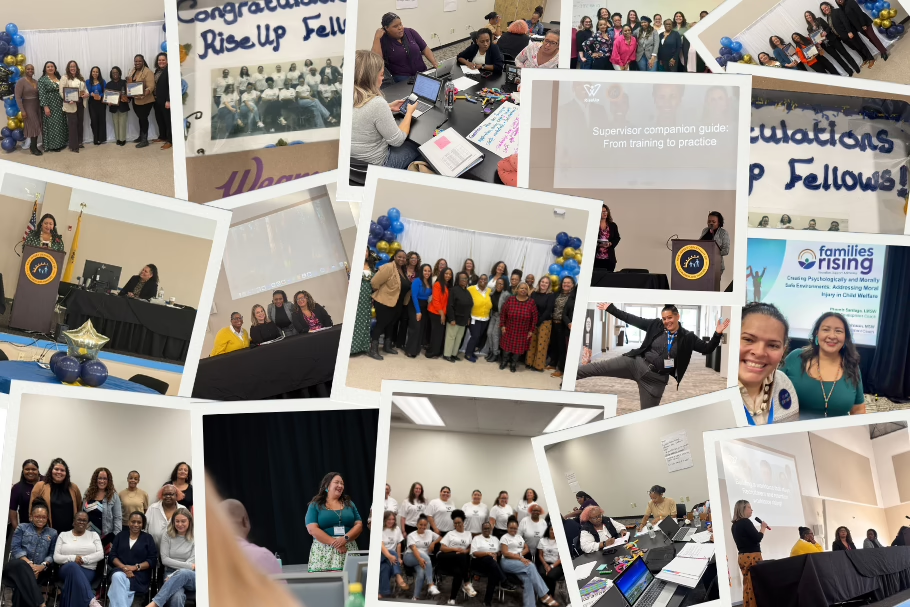
“I would never have the opportunity to create systems change if it wasn’t for this fellowship.”
What is fellowship? It’s all about peer relationships grounded in shared interests, goals, and experiences. At its core, it creates closeness, connection, and collective purpose.
This past year, CWEL partnered with New Jersey DCYF to deliver the RiseUp Fellowship, a cohort-based program that supports and develops leaders in child welfare. In our time with New Jersey, the purpose of fellowship was clear and deeply shared: ensuring the safety, well-being, and success of New Jersey’s children and families.
The problem: An exhausting and complicated system
Those who work in child welfare know that this field is not for the faint of heart. The work is demanding, emotionally taxing, and often unpredictable. Long hours, regular crisis management, and complex family dynamics are the norm rather than the exception. Practitioners are expected to be flexible, show grit, and remain committed in systems with limited, and often shrinking, resources. Despite this, child welfare professionals are still called to deliver excellence every day in the service of safety, permanency, and well-being for children and families.
The solution: A cohort built on support
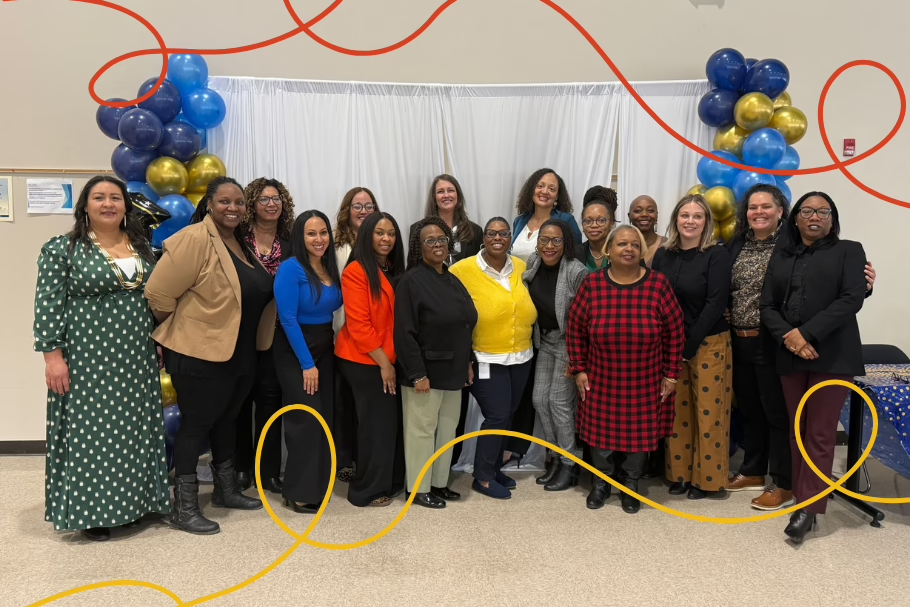
We designed the RiseUp Fellowship with these realities in mind. For one, it strengthens child welfare leaders’ capacity to lead organizational change, while equipping them to support both their teams and the communities they serve. RiseUp also recognizes that to sustainably transform systems, we need leaders who are supported in navigating complexity and leading with intention.
A 12-month fellowship, RiseUp combines in-person and virtual leadership development, professional coaching, and an applied organizational change project. Together, these components enhance recruitment and retention, strengthen workforce wellness, and build healthier organizational cultures within child welfare agencies.
The ultimate goal is ambitious yet essential: transforming child welfare systems in ways that reduce the number of children entering or remaining in care.
The organizational change projects fellows developed over the year reflect this systems-focused approach. In their projects, fellows:
- Created tools to support proficiency in the Solutions-Based Case Planning (SBC) model
- Addressed workforce wellness and secondary trauma
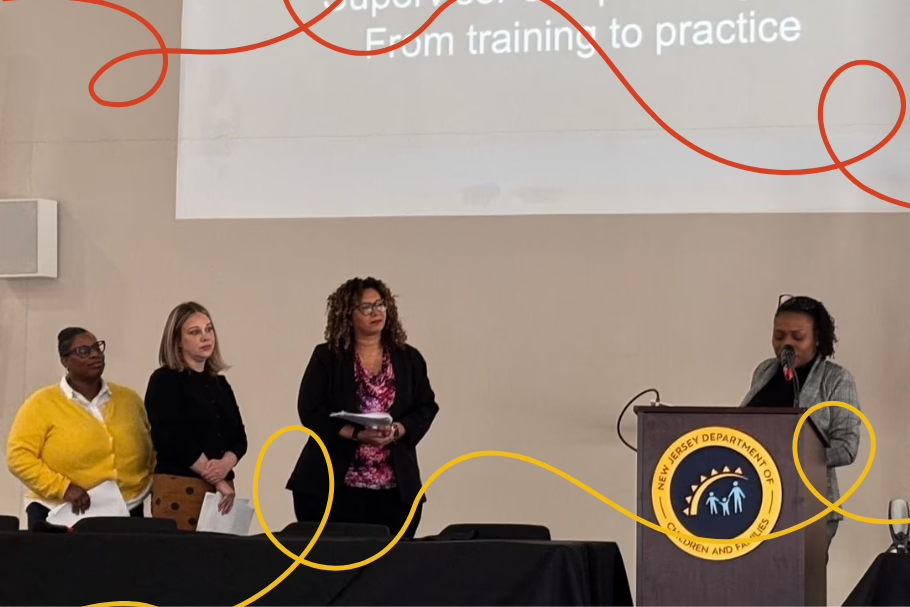
- Developed companion guides for supervisors to help staff navigate complex issues such as domestic violence, physical abuse, and substance use.
Each project responded to a real, identified need within child welfare practice and was designed to be practical, scalable, and sustainable.
The impact: The work happens together
For many fellows, one of the most impactful aspects of RiseUp was the opportunity to connect with peers. Working collaboratively on group projects created space for sharing resources, exchanging ideas, and offering mutual support. Fellows repeatedly spoke about the value of learning alongside others who understand the unique pressures of child welfare work.
As one fellow shared, “I would never have the opportunity to create systems change if it wasn’t for this fellowship.”
That insight speaks to one of the most important lessons to emerge from RiseUp: to remain effective and resilient in this work, we must work together. Fellowship is not just a structure; it is a practice. It is about connection, teamwork, and service to one another as we work in service to children and families. It requires engaging in difficult and intentional conversations, confronting moral injury when our work conflicts with our values or ethical commitments, and committing to collective care.
Throughout the fellowship, we talked often about holding one another up, preventing secondary trauma when possible, and supporting healing when it occurs. We also emphasized the importance of building strong coalitions and navigating the conditions of systems change together. Progress in child welfare is rarely achieved in isolation; it depends on shared vision, trust, and coordinated action.
A spiritual leader once said to me, “We are hypnotized by our environments and cannot see beyond the horizons of our experiences.” In child welfare, this serves as a powerful reminder of the need to move beyond individualistic mindsets. Growth requires openness to possibility, innovation, shared decision-making, and diverse perspectives. It calls us to remain patient, humble, and intentional as we expand our thinking and bridge divides, both within our organizations and across systems.
As the Leadership Development Coach for RiseUp, I am incredibly proud of every fellow who completed the demanding application process, remained committed through challenge and change, and persevered through the program. On January 29, 2026, we celebrated the remarkable achievement that 16 fellows successfully completed the inaugural program. This accomplishment reflects not only individual dedication, but also the strength of the fellowship itself.
I am confident that each fellow will continue to grow as a leader, serve their communities with purpose and integrity, and carry forward the lessons of RiseUp into their work. And above all, they will always remember to, “trust the process!”